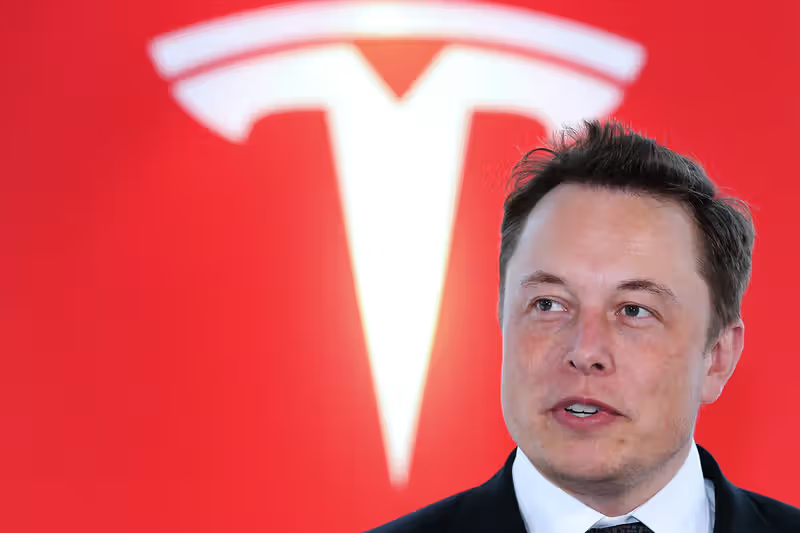
Tesla: Innovations and Challenges Facing the Electric Vehicle Giant
Introduction
Tesla, Inc. has become synonymous with innovation in the electric vehicle (EV) industry, fundamentally altering perceptions of sustainability and transportation. Founded in 2003, the company has evolved into a leader in EV technology, and its impact extends beyond automobiles, influencing energy production and consumption globally. As demand for eco-friendly alternatives to gasoline-powered cars surges, Tesla’s innovations and challenges are of paramount significance to consumers, investors, and policymakers alike.
Recent Developments
In late 2023, Tesla unveiled its highly anticipated Cybertruck, which has garnered significant media attention and consumer excitement. The unique design, coupled with advanced technological features, positions the Cybertruck as a potential game-changer in the EV market. Additionally, Tesla announced plans to expand its Gigafactory in Texas, which aims to increase production capabilities for both vehicles and battery systems.
Moreover, Tesla continues to enhance its Autopilot and Full Self-Driving (FSD) systems, releasing software updates that improve safety and usability. These advancements are critical as the competition intensifies with established automotive manufacturers and new entrants launching their own electric models.
Market Challenges
Despite its successes, Tesla faces numerous challenges. Supply chain disruptions, exacerbated by ongoing geopolitical tensions and a global semiconductor shortage, threaten production timelines. Additionally, rising competition from traditional automakers, who are rapidly ramping up their EV production and innovation efforts, puts pressure on Tesla to maintain its market share.
Furthermore, Tesla’s stock performance has been volatile, with factors such as changing regulations, market conditions, and competition impacting investor confidence. Public scrutiny over safety regulations and autopilot incidents adds an extra layer of complexity for the company, necessitating a focus on transparency and consumer trust.
Conclusion
As Tesla continues to navigate the evolving landscape of the electric vehicle market, its innovations and responses to challenges will undoubtedly shape the industry’s future. The company’s ability to adapt and lead in technology, while addressing regulatory and market uncertainties, will be crucial for sustaining its position as a frontrunner in the transition to sustainable transportation. For consumers, investors, and supporters of renewable energy, keeping an eye on Tesla’s trajectory is essential as it influences both market trends and environmental policies worldwide.