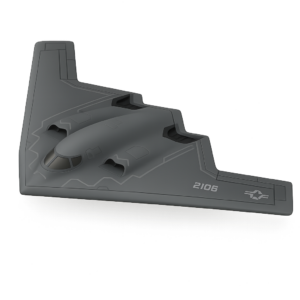
The Impact of the F-35 Lightning II on Modern Warfare
Introduction
The F-35 Lightning II, a family of stealth multirole fighters developed by Lockheed Martin, is significantly reshaping the landscape of modern aviation and military strategy. Its advanced capabilities and technologies are not only enhancing the effectiveness of air forces worldwide but also influencing geopolitical dynamics. As nations continue to invest in this fifth-generation aircraft, understanding its importance becomes crucial for military analysts, policymakers, and citizens alike.
Key Features and Advancements
The F-35 comes in three variants: the F-35A for conventional takeoff and landing, the F-35B for short takeoff and vertical landing, and the F-35C designed for carrier operations. Equipped with advanced stealth features, sensor fusion, and state-of-the-art avionics, the F-35 surpasses previous generations of aircraft in survivability and situational awareness. Its ability to evade radar detection while providing real-time data to pilots makes it a formidable asset in combat scenarios.
Global Adoption and Partnerships
As of 2023, over 1,300 F-35s have been delivered worldwide, and they are in service with branches of the U.S. military and international allies, including the United Kingdom, Israel, Japan, and South Korea. This global partnership fosters enhanced interoperability among allied forces, which is essential in joint operations or coalition warfare. The F-35 program has also spurred significant economic activity, generating thousands of jobs in the U.S. and allied nations through production and maintenance contracts.
Challenges and Controversies
Despite its advanced capabilities, the F-35 program has faced criticism regarding its high costs and development delays. Reports estimate the total lifetime cost of the program may exceed $1.7 trillion, leading to concerns about budget allocations within the U.S. Department of Defense. These financial burdens have sparked debates on whether resources could be better utilized on other military assets. Additionally, environmental concerns have been raised regarding the fighter’s operational noise and carbon footprint.
Conclusion
The F-35 Lightning II remains a pivotal development in aerial combat with its advanced technology and multirole versatility. While it faces challenges concerning costs and controversies, its successful integration into military forces is likely to determine future combat strategies and alliances. As global tensions continue to rise, the relevance and evolution of the F-35 will help shape the air defense capabilities of the 21st century.