India’s Shreyas Iyer Admits Team Shortcomings After Series Loss to England
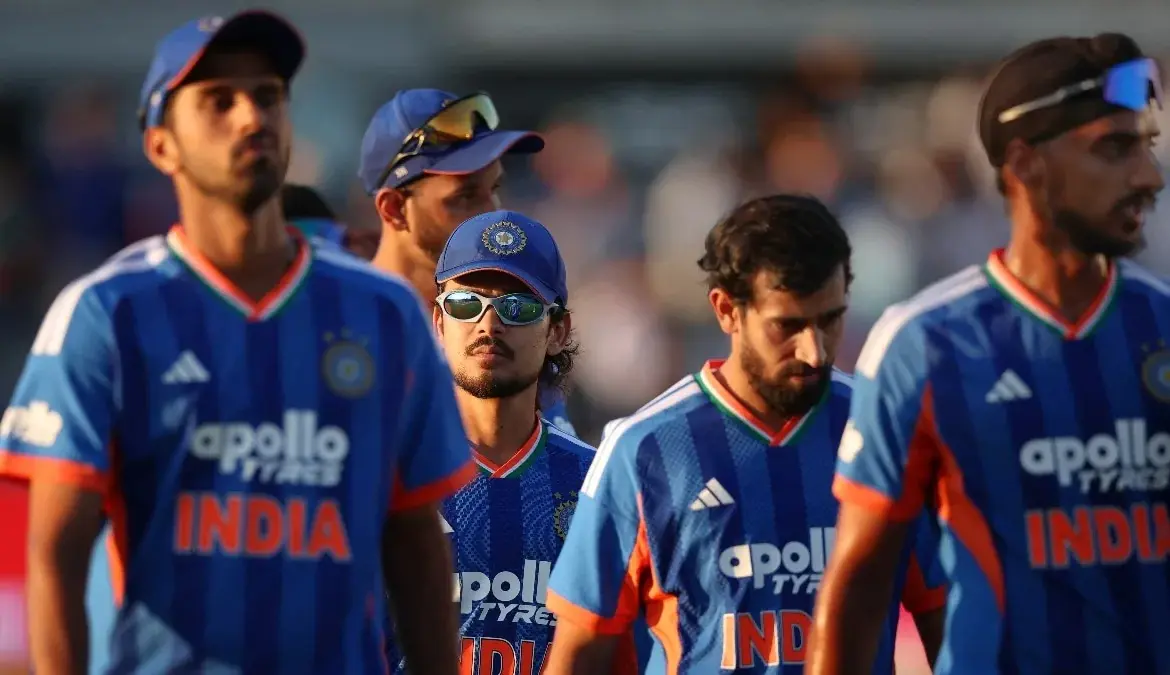
India captain Shreyas Iyer acknowledged his team’s shortcomings across all aspects of the game following England’s decisive nine-wicket victory in the fourth T20I at the County Ground in Bristol. This result secured the five-match T20I series for England, giving them an unassailable 3-0 lead with one match remaining.
Despite scoring an unbeaten 80 runs off 49 balls, Iyer stated that his individual performance held little significance given India’s heavy defeat and the series concession. He remarked after the match that a total of 158 runs was not ideal, especially considering how quickly England chased it down.
India managed to post 158/7 after recovering from an early collapse in their top order. However, England successfully reached the target in just 13.5 overs, largely due to an unbroken partnership between Harry Brook and Phil Salt.
Bowling Execution Challenges
Reflecting on India’s bowling performance, Iyer disclosed the team’s strategies but admitted that the bowlers struggled with consistent execution. He had instructed his bowlers to maintain specific lengths, aiming for the top of middle-stump and leg-stump, as these areas were difficult for the opposition to hit for boundaries.
Iyer noted that the team’s execution fell short. He observed that when India’s bowlers attempted to vary their pace or try different approaches, England capitalized on those deliveries, scoring off what he termed “loose balls.”
While Iyer’s resilient batting was one of the few positive takeaways for India, the captain emphasized that personal achievements mean little without a team victory. He expressed satisfaction with his own performance but disappointment that it did not contribute to a winning cause.
Iyer reiterated his desire to perform well and ensure his team wins whenever he plays, acknowledging that the day in Bristol was not such an occasion. He stated his intention to look forward to the subsequent match.
Team Transition and Selection Dilemmas
In the lead-up to the fourth T20I, India faced selection challenges and difficulties adapting to the conditions. The team, under Iyer’s leadership, had a significant task ahead in the must-win game.
India’s batters had previously struggled against England’s pace attack, leading to a substantial 125-run defeat in the third T20I, which gave the hosts an unassailable 2-0 series lead. The team’s head coach, Gautam Gambhir, had not ruled out the return of Sanju Samson, who had been dropped from the second and third T20Is in favor of Vaibhav Sooryavanshi.
The coaching staff, led by Gambhir, and the selection committee, headed by Ajit Agarkar, bore the primary responsibility for the team’s performance. The team’s weaknesses and a perceived lack of clear vision from the management were highlighted by their previous capitulation at Trent Bridge.
The batting lineup had struggled against a fast pace attack, with Jofra Archer and Josh Tongue taking seven wickets between them, including the top five. To potentially reintroduce Samson without disrupting the opening partnership and to allow Sooryavanshi to play without pressure, a reshuffle of the middle order was considered.
While wicketkeeper-batter Ishan Kishan was expected to retain his place due to his glovework and batting ability, the position of vice-captain Tilak Varma was under scrutiny. Varma, known for his finishing skills, had struggled to convert his starts in matches in England, with scores of 13, 24 not out, and 3, apart from a 55 against Ireland that came in a losing effort.
Iyer suggested that the team is currently in a “transition phase” and that mistakes are an inevitable part of this process. He noted that many young players are experiencing overseas conditions for the first time, and these mistakes would help them understand the importance of adaptation and awareness in such environments.
India will now participate in the fifth and final T20I in Southampton, aiming to avoid a 4-1 series defeat.
Read Also
Source: timesofindia.indiatimes.com