Zojila Pass Tragedy: Avalanche Claims Lives in Jammu and Kashmir
The Zojila Pass, a notorious stretch in the Himalayas, has long been known for its treacherous conditions, particularly during winter months. Historically, this pass would remain closed for nearly five months, isolating Ladakh from the rest of India. However, recent developments have brought both hope and tragedy to this vital route.
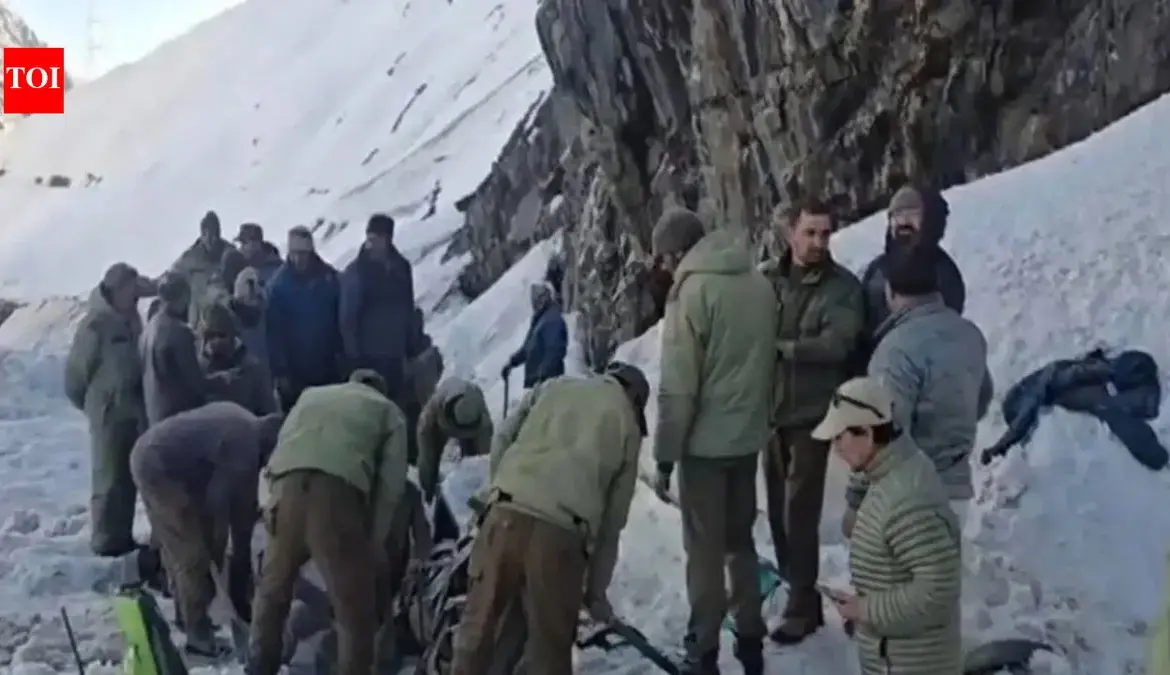
On a fateful Friday afternoon, around 3 PM, an avalanche struck near Zero Point at an elevation of 3,528 meters (11,649 feet), burying several vehicles traveling from Srinagar to Kargil. This unexpected event resulted in the tragic loss of at least seven lives, with five others sustaining injuries.
Rescue teams quickly mobilized, employing JCBs to clear the snow and assist trapped passengers. While seven bodies have been retrieved, two individuals remain unaccounted for, and authorities are continuing their efforts to locate them. The avalanche has also blocked the Srinagar-Kargil highway, complicating travel and rescue operations.
The Lieutenant Governor of Ladakh expressed deep concern over the tragedy, emphasizing the need for improved safety measures in the region. As rescue and clearance operations continue, authorities have urged travelers to avoid the Zojila Pass until conditions stabilize.
In light of this incident, the ongoing construction of the Zojila Tunnel, designed to provide year-round connectivity between Srinagar, Drass, Kargil, and Leh, takes on new significance. Once completed, this tunnel is expected to dramatically transform travel conditions, offering a safe, weather-proof corridor that could prevent such tragedies in the future.
Currently, travel across the Zojila Pass can take between three to four hours, but the anticipated travel time through the Zojila Tunnel is expected to be reduced to just 15-20 minutes. This shift could greatly enhance accessibility and safety for residents and travelers alike.
Experts have long regarded the Zojila Pass as one of the most perilous routes in the Himalayas, notorious for its steep gradients, narrow corridors, and sudden weather shifts. The recent avalanche serves as a stark reminder of the dangers that persist in this beautiful yet unforgiving landscape.
As the community grapples with the aftermath of this tragedy, the hope remains that the Zojila Tunnel will bring much-needed change, ensuring safer passage for all who traverse this vital route. Details remain unconfirmed regarding the exact number of vehicles trapped under the avalanche, but the focus remains on the ongoing rescue efforts.