World Cup Final: Argentina vs. Spain
Argentina, the defending champions, are set to face Spain in the World Cup final on Sunday. This highly anticipated match brings together Lionel Messi and a Spanish squad that has maintained an unbeaten streak of 37 consecutive matches since early 2024.
For Spain, this final presents an opportunity to secure a second World Cup title, following their victory in 2010, and to solidify their position as a dominant force in football. Argentina, on the other hand, aims to become the first men’s team to win back-to-back World Cup titles since Pele and Brazil achieved it in 1958 and 1962. For Messi, this tournament is expected to be his final appearance with the national team.
Tactical approaches for the final
The final is anticipated to be a clash between Argentina’s emotional play and Spain’s structured, possession-based style. Spain has averaged 64% possession throughout the tournament, reflecting their emphasis on ball retention. Their coach, Luis de la Fuente, has reinvigorated the juego de posición model, a system he is deeply familiar with from his time within the federation’s youth teams.
Argentina, under coach Lionel Scaloni, has focused on restoring a more traditional Argentinian game, emphasizing short passing. Matías Manna, Argentina’s analyst, highlights midfielder Leandro Paredes as a crucial presence, noting his ability to win the ball and effectively link with inside players and the No. 10. Manna stresses the importance of integrated play and the tactical and emotional bonds among players over rigid formations.
One key aspect for Argentina will be disrupting Spain’s midfield rhythm, potentially through a man-to-man marking strategy on Rodri, who is considered the metronome of the Spanish midfield. Players like Alexis Mac Allister or Enzo Fernández might be tasked with this role.
Spain’s attacking threat in wide areas has been affected by injuries. Nico Williams, a significant force in previous Euros, has been limited to substitute appearances, while Álex Baena, a central creator, has been filling in on the flank without natural pace. Lamine Yamal, who entered the tournament with a hamstring issue, has shown improvement but has not yet reached his peak form.
Messi’s journey and Spain’s defensive strength
Messi’s history with Spain is notable, having spent much of his club career there. Despite attempts to convince him to play for Spain’s national team, he remained committed to Argentina. Their last encounter was a friendly in 2010, where Argentina defeated the then-reigning World Cup champions. The upcoming final also features an interesting storyline with Messi and Lamine Yamal, who were photographed together years ago, now sharing the pitch.
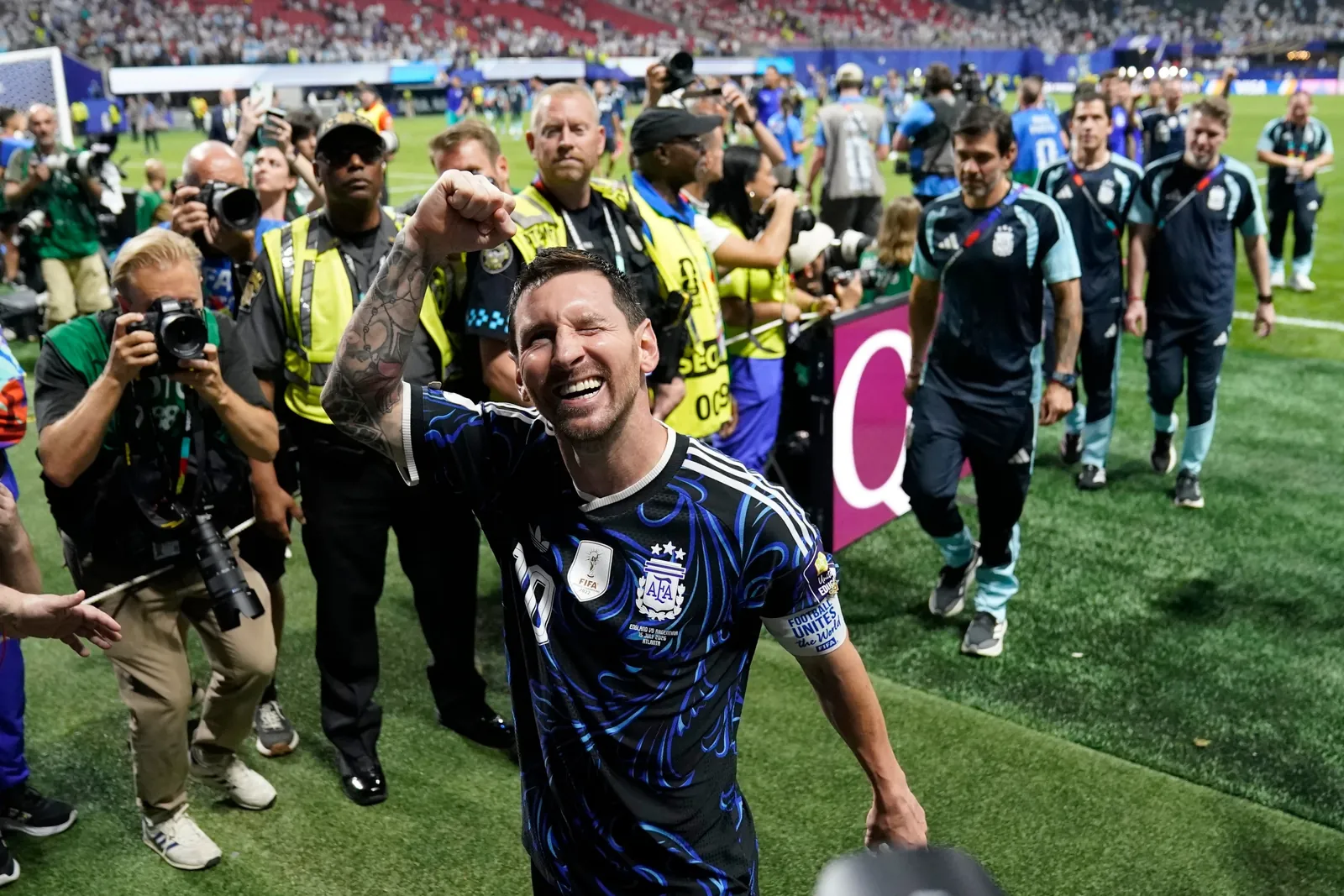
Messi’s career with the national team has seen its challenges. He briefly retired from international football in 2016 after Argentina lost the Copa América final. However, his return led to significant success, including Copa América titles in 2021 and 2024, and the World Cup in 2022.
Spain enters the final as favorites, largely due to their formidable defense, having conceded only one goal in their first seven matches of the tournament. They have not trailed at any point in this World Cup. This defensive record places them among elite teams like Spain in 2010, Italy in 2006, and France in 1998, all of whom won the title while conceding only two goals in their respective tournaments.
Rodri, Spain’s captain, acknowledged Argentina’s strength beyond Messi, describing them as a complete team with top players. He emphasized that both finalists are strong collective units. The final match will conclude the tournament on Sunday.
The emotional and strategic dynamics
The final is poised as a classic confrontation between a process-driven team and a side fueled by emotional momentum. While passion can be a powerful asset, it also carries the risk of boiling over, potentially benefiting the more rational and composed opponent. If Spain takes the lead, they could frustrate Argentina by denying them possession and exploiting counter-attacking opportunities.
However, Argentina is described as a self-aware team, capable of channeling their drive effectively. The longer the match progresses without a goal, the more likely it is that Messi’s influence could shape the outcome. His ability to turn matches through skill and determination has been a defining characteristic of Argentina’s knockout stage performances.
Argentina’s likely formation against Spain is a 4-5-1, similar to their setup against England, with Messi operating as a loose center-forward and Julián Álvarez on the left. A key decision for Argentina will be whether to deploy Giuliano Simeone as an irritant on the right or to use Rodrigo De Paul, Messi’s more familiar bodyguard.
Cape Verde and Egypt previously highlighted Argentina’s vulnerability to pace, a factor that England did not exploit. Spain, however, may not possess the same directness in wide forward areas that characterized their success in previous Euros, due to current injury concerns within their squad.
The World Cup final is scheduled for Sunday.
Read Also
- Barcelona connection: Messi and Yamal set to meet in World Cup final after iconic photo resurfaces
- White House defends Argentina team's free speech over Falklands banner
- New York faces smoke, travel concerns ahead of World Cup final
- Tuchel defends decisions after England's World Cup exit, cites no regrets
Source: theguardian.com