Barcelona connection: Messi and Yamal set to meet in World Cup final after iconic photo resurfaces
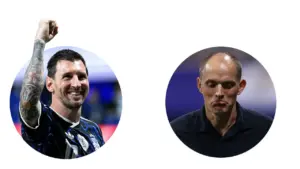
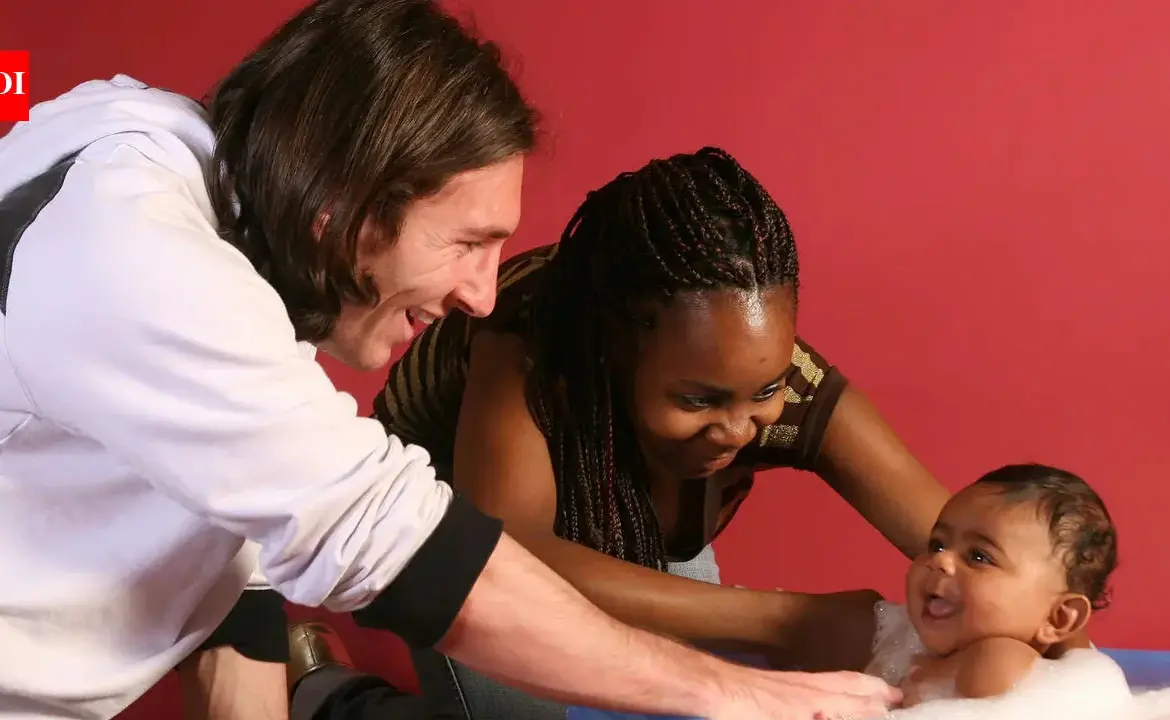
A photograph taken almost two decades ago, featuring a young Lionel Messi holding an infant Lamine Yamal, has gained significant attention ahead of Sunday’s World Cup final. The image, initially part of a charity calendar, depicts Messi bathing Yamal in a plastic bathtub. This seemingly ordinary photo has now become a focal point as Messi’s Argentina is set to face Yamal’s Spain for the coveted trophy.
Photographer Joan Monfort, who captured the image in 2007, expressed his surprise at the turn of events. He mentioned that he never believed in destiny, but the current situation has led him to question his views, calling it “beyond all reasonable explanations.” Monfort, a freelance photojournalist, took the pictures for a charity calendar produced by local newspaper Sport and UNICEF.
The opportunity arose when Yamal’s mother won a raffle for families in Mataró, near Barcelona, to participate in the photoshoot. This chance pairing of the future Barcelona star with one of football’s greatest players has been described as a remarkable twist of fate. Messi, reflecting on the photograph, wished Yamal well, acknowledging the surreal nature of facing him on the field after having held him as a baby. He described the situation as “crazy” and wished Yamal the best of luck.
The Resurgence of an Iconic Image
The photograph remained largely forgotten until Yamal’s father shared it on social media during the 2024 European Championship. At that time, a teenage Yamal was making his international debut, leading Spain to the title. The image quickly went viral, but its popularity has surged even further with the impending World Cup final.
Monfort noted that the interest in his photos has “exploded all over the world,” with the final being held in the U.S. adding to its prominence. He remarked that the culmination of Messi and Yamal facing each other in the final is “better than any film script.” Monfort has been inundated with requests for the photos from media outlets, while also observing their widespread reproduction online without proper credit or compensation.
Mikel Merino, a teammate of Yamal on the Spain squad, shared a common reaction to the photo. He initially thought it was an AI-generated image, finding it “unbelievable” that two significant players, with Yamal potentially becoming one of the best, share such a picture. Merino expressed hope for a vibrant final featuring both players at their peak, delivering a great spectacle for fans.
Many Barcelona fans, including Monfort, find themselves in a dilemma due to their affection for both Messi and Yamal. It is common to see children in Barcelona wearing shirts representing both Yamal’s Barcelona and Spain teams, as well as Messi’s various club and national team jerseys. Monfort, a lifelong Barcelona supporter, mentioned his heart is split, unsure whether to root for Messi or Yamal.
He expressed his “everlasting love for the best player of all time” (Messi) but also acknowledged Yamal’s impact, representing a new and diverse Spain with parents from Morocco and Equatorial Guinea. Monfort even suggested that both could somehow win, given the extraordinary circumstances.
La Masia’s Enduring Legacy
The narrative surrounding Messi and Yamal also highlights the enduring influence of La Masia, Barcelona’s renowned youth academy. Both players are products of this system, which has been instrumental in shaping their footballing careers. La Masia, meaning “The Farmhouse,” initially housed young players in an old Catalan farmhouse built in 1702.
In 2010, La Masia achieved a significant milestone by becoming the first youth academy to have trained all three players on the Ballon d’Or podium: Messi, Xavi, and Andrés Iniesta. That same year, Spain won its sole World Cup, with seven Barcelona players in the starting lineup for the final, six of whom were La Masia graduates.
The physical farmhouse ceased housing players in 2011, with residents moving to a more modern academy. However, La Masia evolved into an idea, representing Barcelona’s identity and its tradition of identifying, educating, and promoting technically gifted footballers. Yamal’s emergence is seen as a return to La Masia’s principles, particularly after the club faced financial difficulties.
Currently, nine academy graduates are part of the two World Cup final squads, with eight representing Spain and Messi with Argentina. The academy’s philosophy never aimed to create specific players like Messi or Yamal, but rather to instill a common footballing tradition focused on ball reception, field awareness, creating space, and understanding positional play.
The concept of Total Football, introduced to Barcelona by Rinus Michels from Ajax and later championed by Johan Cruyff, underpins La Masia’s approach. This philosophy emphasizes players interchanging positions while maintaining team structure, requiring each player to understand multiple roles. Cruyff’s return as manager in 1988 saw his “Dream Team” win four consecutive league titles and Barcelona’s first European Cup in 1992.
Cruyff’s philosophy prioritized technical intelligence over brute force, leading the academy to select players based on their understanding of specific functions rather than physical attributes. Pep Guardiola, a young midfielder who came through this system, famously compared Cruyff’s legacy to a painted chapel that subsequent coaches could only refine. Louis van Gaal, another influential figure, also believed in Total Football, albeit with a focus on discipline. His first spell at Barcelona resulted in two league titles and a Copa del Rey, and was described as a significant “coaching seminar” attended by future managers like Guardiola, Luis Enrique, and Xavi. Xavi, upon returning as Barcelona manager, promoted Yamal to the first team.
La Masia’s influence extended globally, forming the backbone of Barcelona’s dominance for a decade after 2008 and providing the core of Spain’s 2010 World Cup-winning side. Its diaspora of players, coaches, and executives, with Guardiola being a prominent example, spread its footballing lingua franca worldwide. This influence was particularly evident between 2008 and 2012, when Guardiola integrated players like Sergio Busquets and Pedro into the first team, brought Gerard Piqué back, and positioned Xavi and Iniesta at the heart of the midfield.
In 2000, Van Gaal’s vision of winning the Champions League with 11 homegrown players was met with ridicule. However, less than a decade later, Barcelona, with six La Masia graduates in their starting XI, dismantled Sir Alex Ferguson’s Manchester United, the reigning European champions, in a performance that highlighted the academy’s success. Guardiola later took these tactical ideas to Bayern Munich and Manchester City, where former Barcelona executives helped establish a similar footballing operation that expanded into the wider City Football Group.
The upcoming World Cup final on Sunday will feature these two players, Messi and Yamal, on opposing sides.
Read Also
Source: apnews.com