Understanding the Extreme Cold Warning: What You Need to Know
Introduction
The recent extreme cold warning issued by the National Weather Service (NWS) has raised significant concerns across multiple states in the Midwest and Northeast. With temperatures plummeting to dangerously low levels, understanding the implications of such warnings is crucial for safety and preparedness.
Details of the Warning
As of late January 2023, the NWS has issued extreme cold warnings for regions including Minnesota, Wisconsin, Illinois, and parts of New York. The forecast predicts chilling temperatures dipping as low as -30°F with wind chills that could make it feel even colder. This extreme weather pattern is attributed to a polar vortex influencing the arctic air masses sweeping southward.
Impact on Daily Life
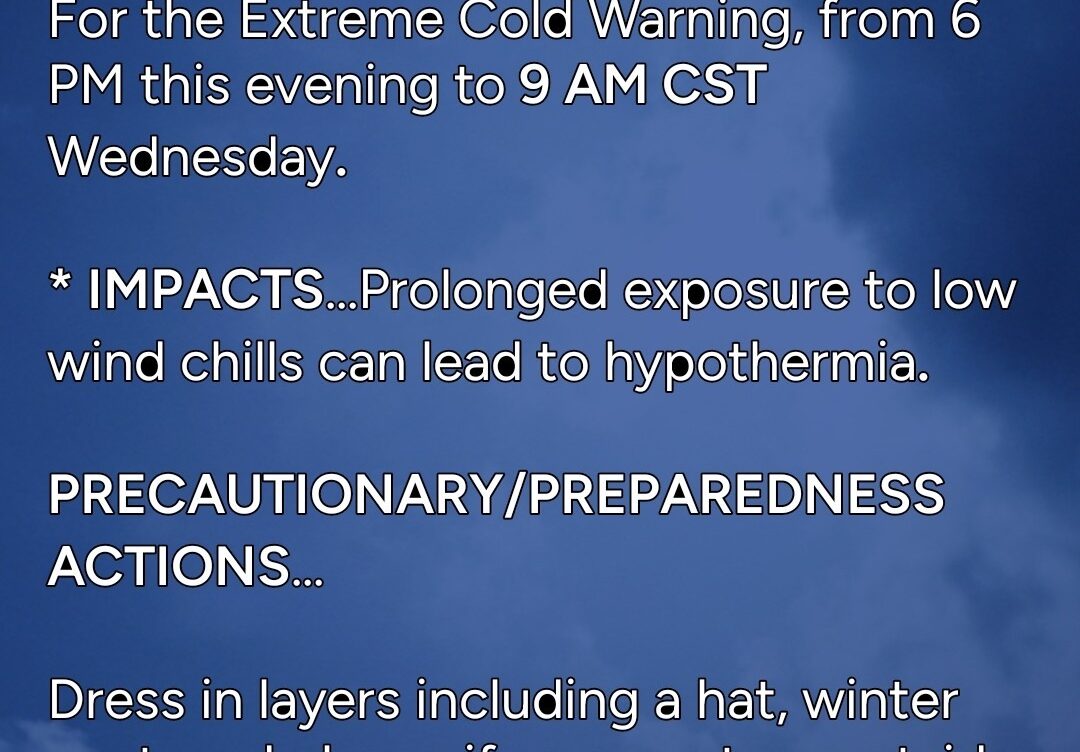
The combination of severe temperatures and strong winds raises serious risks for residents. Prolonged exposure to such cold can lead to frostbite and hypothermia in as little as 30 minutes. Schools and businesses may decide to close, and travel advisories are already in place as road conditions could deteriorate rapidly with snow and ice.
Advice for Residents
The NWS recommends that anyone in affected areas take precautions. Dressing in multiple layers, covering exposed skin, and maintaining warmth in homes are essential steps. Furthermore, residents are advised to limit outdoor activities to reduce the risk of cold-related illnesses.
Conclusion
Extreme cold warnings serve as a critical reminder of the power of winter weather and the importance of preparedness. Meteorologists anticipate that these unseasonably cold temperatures may persist for several days, prompting continued vigilance among residents. Ensuring safety during such weather events is paramount, as the health risks associated with extreme cold can have severe repercussions.