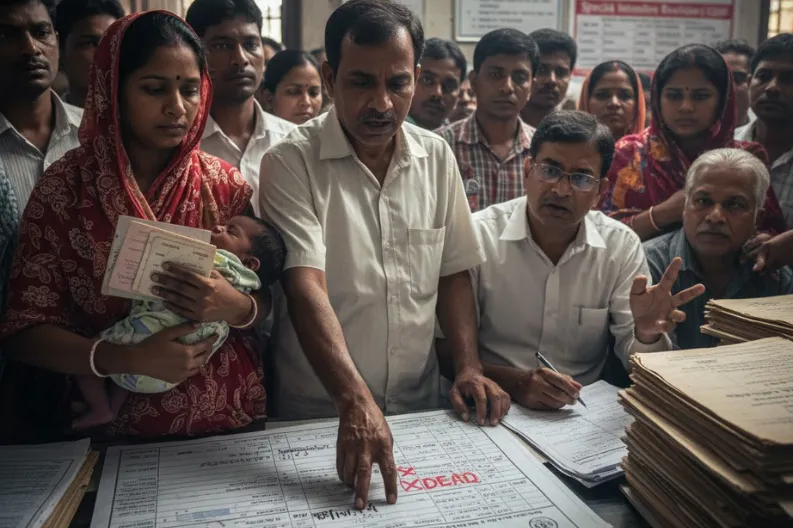
Supplementary Voter List 2026 Published in West Bengal
In the lead-up to the publication of the supplementary voter list 2026, expectations were high in West Bengal. The state was grappling with a backlog of pending voter records, with many residents anxious about their eligibility to vote in the upcoming elections.
On March 24, 2026, a decisive moment arrived when the Election Commission of India (ECI) and the West Bengal Chief Electoral Officer (CEO) published the first supplementary voter list. This list marked a significant turning point, as 27 lakh pending voter records were settled, with approximately 2 lakh names processed daily.
The implications of this development are profound for the residents of West Bengal. With the total number of voters now standing at 7,04,59,284, compared to 7,08,16,630 in the earlier draft roll, the efforts to clean up the voter registry have been substantial. Moreover, 29 lakh adjudications have been completed out of the 60 lakh cases that were under judicial review, showcasing the commitment to ensuring a fair electoral process.
However, the process has not been without its challenges. The ECI took the significant step of removing 73 Returning Officers (ROs) to enhance the integrity of the electoral process. This move reflects the seriousness with which the commission is treating the upcoming elections.
Manoj Kumar Agarwal, a spokesperson for the ECI, emphasized the importance of transparency in this process. “Voters whose names are excluded from the supplementary list will be able to appeal through these tribunals,” he stated, ensuring that every voice is heard.
As the supplementary list was released around 9.30 pm on Monday, the community’s response has been largely positive, with many expressing relief at the resolution of their voter status. The hard copy of the supplementary list will be available at the offices of the district electoral officers (DEOs), making it accessible for verification.
Furthermore, Agarwal noted that centralized processing of the list is ongoing in the office of the apex poll body in Delhi, indicating a streamlined approach to managing voter registrations.
As the model code of conduct is strictly enforced across all assembly constituencies, the focus remains on maintaining a fair and transparent electoral environment. The community is now looking forward to participating in the democratic process with renewed confidence.
With new District Magistrates appointed in 11 districts, the local governance landscape is also evolving, further supporting the electoral integrity efforts.
Details remain unconfirmed regarding any additional measures that may be implemented as the elections approach, but the community’s engagement and vigilance will be crucial in the coming weeks.