Nukes: Update on : Iran’s Isfahan Site Struck
Recent Developments
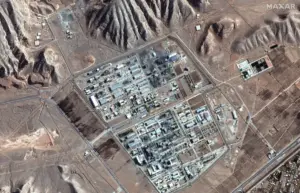
In a significant development in the ongoing tensions surrounding nuclear capabilities, Iran’s Isfahan nuclear site has reportedly been struck, as confirmed by the United Nations. The incident occurred just before the international community was set to assess Iran’s nuclear activities, heightening concerns over the country’s nuclear ambitions.
According to Rafael Mariano Grossi, the head of the International Atomic Energy Agency, the damage to the Isfahan site appears to be minor. He stated, “Since the beginning of this campaign, we’ve seen some impacts in Natanz — a couple — and one in Isfahan. Not a very major one, I should say.” This indicates that while the strike was notable, it may not have severely impacted Iran’s nuclear capabilities.
Current State of Affairs
At the Isfahan nuclear site, more than 200 kilograms of enriched uranium were stored, with the material enriched up to 60% purity. This level of enrichment is significant, as it approaches the threshold for weapons-grade uranium, which is typically around 90% purity. Grossi noted that the widespread assumption is that the material is still there, suggesting that Iran’s nuclear program remains intact despite the strike.
The implications of this incident extend beyond Iran. North Korea’s nuclear posture is reportedly hardening in response to the ongoing crisis involving Iran. Historically, North Korea and Iran have cooperated on military technology, with North Korea having sold Scud missiles to Iran during the Iran-Iraq War. This relationship, while lacking deep economic or cultural foundations, has been united in their struggle against US hegemony for most of the past half-century.
Regional Implications
The current situation underscores the belief that nuclear arms are viewed as the ultimate guarantor of regime survival, particularly for the Kim regime in North Korea. As one expert noted, “For the Kim regime, the bomb was never just a prestige project – it was a survival strategy.” This perspective reinforces the notion that North Korea may further entrench its nuclear capabilities in light of the developments in Iran.
The US-South Korea alliance remains treaty-bound to deter North Korean threats, and the evolving dynamics in the region could lead to increased military posturing from both North Korea and Iran. The recent strike on the Isfahan site may serve as a catalyst for further escalations in nuclear rhetoric and actions.
As the situation develops, the international community will be closely monitoring both Iran’s nuclear activities and North Korea’s response to the ongoing crisis. Details remain unconfirmed regarding the full extent of the implications of the strike on Iran’s nuclear program and its impact on regional stability.