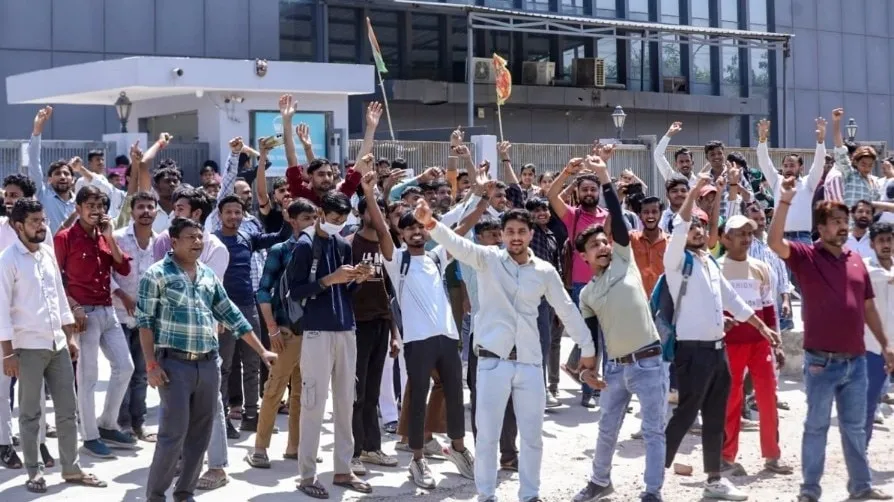
Noida Sees Major Protests Over Rising Living Costs
Noida, India, has been the epicenter of significant protests that began on April 9, 2026, as workers took to the streets demanding action against rising living costs and stagnant wages. The protests escalated, leading to a near standstill of traffic across the city and on key corridors for nearly six hours, causing widespread disruption and frustration among commuters.
The immediate impact of the protests was felt most acutely on major routes, including the Delhi-Noida Link Road, DND flyway, and the Delhi-Meerut Expressway. Reports indicated long tailbacks stretching several kilometers, with one commuter, Ankit Sharma, lamenting, “It took me nearly two and a half hours to reach from Indirapuram to Okhla. Usually, it’s a 45-minute drive.” The situation prompted the Delhi Traffic Police to issue its first advisory at 11:48 am on the day of the protest, as traffic conditions worsened.
As the protests unfolded, the Local Intelligence Unit of the Noida Police faced criticism for failing to provide timely intelligence, which contributed to the breakdown of law and order. The protests not only caused traffic chaos but also resulted in vandalism across 80 factories in Greater Noida and Noida, further exacerbating the situation. Neha Gupta, another commuter, expressed her frustration, stating, “There was no proper advisory in the morning. By the time we realised what was happening, we were already stuck in the middle of it.” The disruption also impacted school operations in both Delhi and Noida, affecting families across the region.
By mid-afternoon, the situation began to ease, with traffic normalization taking approximately 1.5 hours after the protests subsided. However, the aftermath of the protests raised questions about the effectiveness of police and administrative responses. Uttar Pradesh Labour Minister Anil Rajbhar commented on the situation, stating that the protests are being investigated as part of a “larger conspiracy,” hinting at a possible link to external forces. He urged the public not to fall prey to misleading information or provocation, emphasizing the need to maintain peace.
The protests in Noida reflect a growing discontent among workers facing economic challenges, a sentiment that has been echoed in various parts of India. As the cost of living continues to rise, the demand for better wages and working conditions has become increasingly urgent. The situation in Noida serves as a reminder of the ongoing struggles faced by many in the workforce, highlighting the need for dialogue and resolution.
Details remain unconfirmed regarding the exact nature of the “larger conspiracy” mentioned by Minister Rajbhar and the effectiveness of the police response to the protests. As the community reflects on the events of the past days, the hope remains that constructive conversations will emerge to address the underlying issues that sparked the unrest.