Michael Vaughan Critiques T20 World Cup Final Performance
Did Michael Vaughan’s Critique of the T20 World Cup Final Reflect a Larger Issue in Cricket?
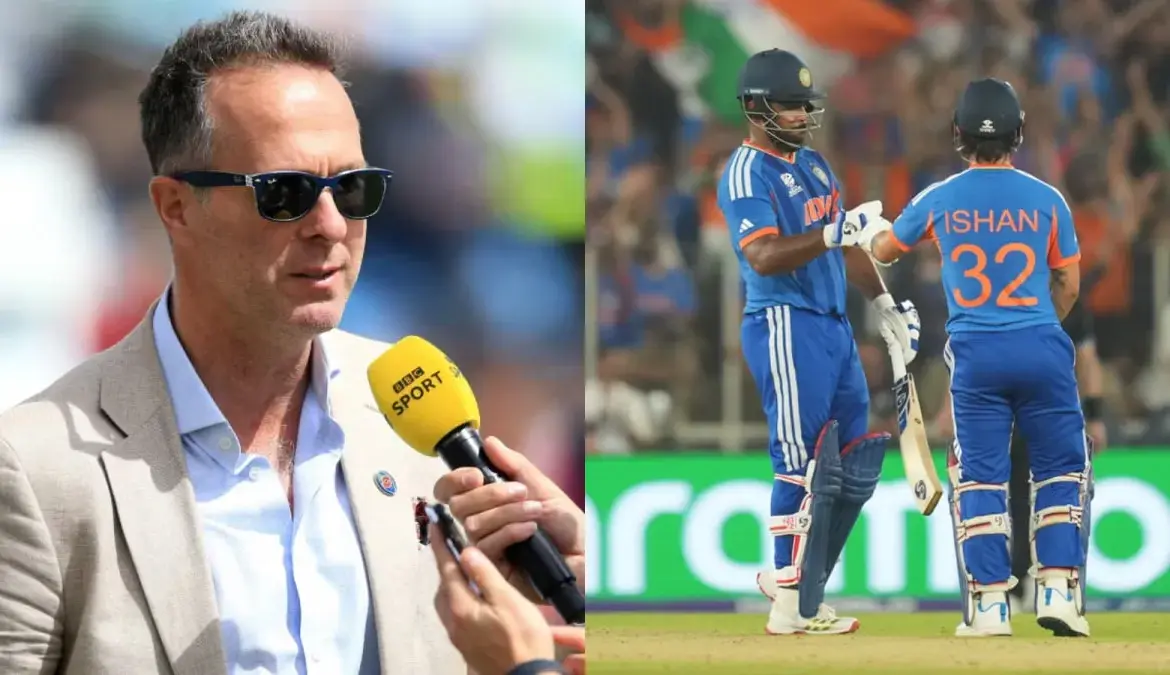
In the aftermath of the T20 World Cup final held on March 8, 2026, at the Narendra Modi Stadium in Ahmedabad, a pressing question arises: Is the balance between bat and ball in T20 cricket becoming increasingly skewed? Michael Vaughan, former England captain and cricket analyst, voiced his concerns regarding this very issue, stating, “This isn’t fair balance between Bat & Ball .. #ICCT20WorldCupfinal.” His remarks came despite India’s impressive victory over New Zealand, where they scored 255 runs for the loss of 5 wickets.
India’s performance in the final was marked by a remarkable Powerplay score of 92 runs without losing a wicket, the highest ever recorded in a T20 World Cup match. Sanju Samson played a pivotal role, scoring a half-century that included eight sixes and five fours, while Abhishek Sharma contributed significantly with 52 runs off just 21 balls. This offensive display led to India securing a commanding total, yet Vaughan’s critique suggests that such high scores may not reflect a well-balanced contest.
Vaughan’s skepticism about the balance of play is not new; he has previously criticized similar trends in T20 matches. His comments resonate with a growing sentiment among some cricket analysts who argue that the increasing dominance of batsmen is compromising the integrity of the sport. The T20 format, known for its explosive scoring, has often led to debates about whether bowlers are being given a fair chance to compete.
In the context of the final, Dinesh Karthik’s pre-match ritual of pressing his shirt, which he claims has been associated with India’s victories since 2024, adds another layer to the narrative. Karthik, who has been a consistent performer for the Indian team, expressed confidence before the match, saying, “Expect some firecrackers.” His belief in the ritual may have contributed to the team’s success, but it also highlights the psychological aspects that players bring into high-stakes games.
Despite Vaughan’s critique, he acknowledged India’s achievement, congratulating them on their T20 World Cup victory and labeling them as the best side in the tournament. He tweeted, “Well done @WasimJaffer14 .. Your team are too good .. The best white ball team in the world by a good distance ..” This recognition from Vaughan, a respected figure in cricket, underscores the complexities of the sport where performance and balance are often at odds.
As the cricketing world reflects on this final, the implications of Vaughan’s comments may lead to further discussions about the future of T20 cricket. With the format continuing to evolve, stakeholders may need to consider adjustments to ensure a more equitable competition between bat and ball. The ongoing dialogue surrounding this issue is crucial for maintaining the sport’s integrity.
While India celebrates its victory, the concerns raised by Vaughan and others highlight a significant debate within the cricket community. As the T20 format progresses, the question remains: how can the balance between bat and ball be restored to ensure a fair and competitive game? Details remain unconfirmed regarding any potential changes to the rules or formats that may address these concerns, leaving fans and analysts alike eager for clarity.