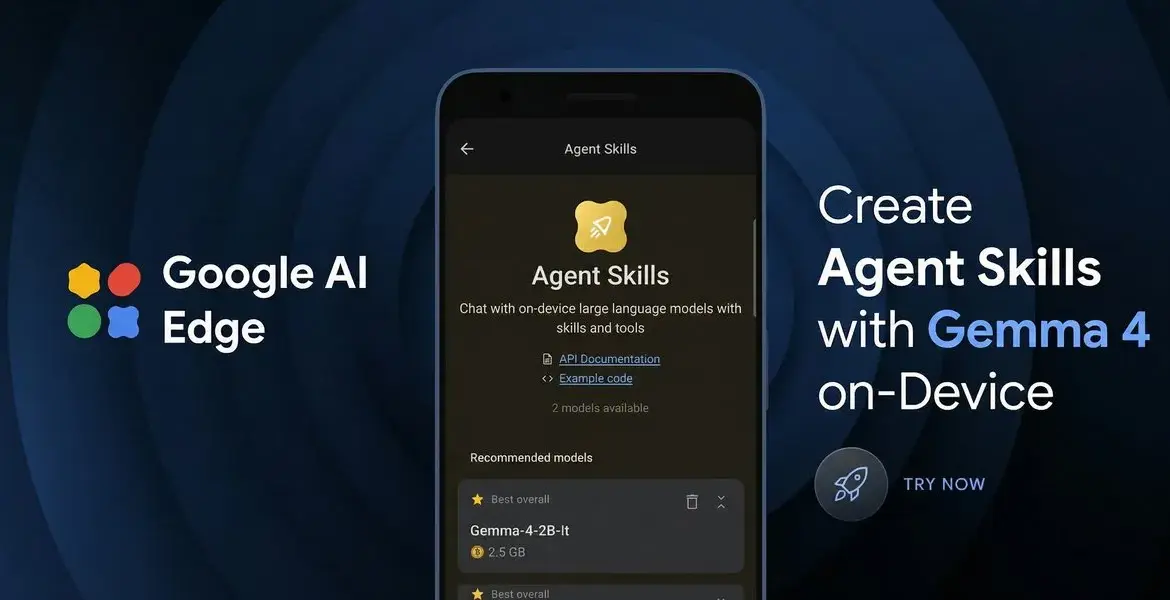
Gemma 4 AI: A New Era in On-Device Intelligence
Just as the world increasingly embraces artificial intelligence, Google DeepMind has unveiled Gemma 4, a groundbreaking family of open models designed to enhance on-device intelligence. This innovative suite supports over 140 languages, making it accessible to a diverse global audience.
Launched recently, Gemma 4 is built on Gemini’s research, aiming to provide faster and more private AI experiences. The models are available under the Apache 2.0 license, allowing developers to harness their capabilities freely.
One of the standout features of Gemma 4 is its ability to perform multi-step planning, autonomous action, and offline code generation. This means users can expect a high level of interactivity and efficiency from their devices, whether they are mobile, desktop, IoT, or robotics.
As of now, the Gemma 4 models boast a remarkable 128K context window, enabling them to process long-form content effectively. This feature is particularly beneficial for developers looking to create applications that require extensive data handling.
The E2B and E4B models within the Gemma 4 family support native audio input for speech recognition, enhancing user interaction. Additionally, these models can achieve a prefill throughput of 133 tokens per second on devices like the Raspberry Pi 5, showcasing their efficiency even on lower-end hardware.
Gemma 4 is optimized for fine-tuning on a range of devices, from billions of Android smartphones to powerful developer workstations. This flexibility allows developers to create autonomous agents that can interact seamlessly with various tools and APIs.
Notably, the models include 26B and 31B versions, specifically designed for optimal performance on targeted hardware. This strategic sizing is intended to empower the next generation of pioneering research and products.
As the Gemma 4 models continue to roll out, the excitement within the tech community is palpable. “The era of agentic experiences on-device is here, and we hope you are excited to start building on the edge,” a representative from Google DeepMind noted.
With the promise of high-quality offline code generation, Gemma 4 is set to transform workstations into local-first AI code assistants, making it easier for developers to innovate.
As we look forward to the developments that Gemma 4 will bring, it is clear that this technology will play a significant role in shaping the future of AI applications, making them more powerful, accessible, and open than ever before.