Frohnmaier’s Rise and Challenges in Baden-Württemberg Politics
Political Landscape Before the 2026 Election
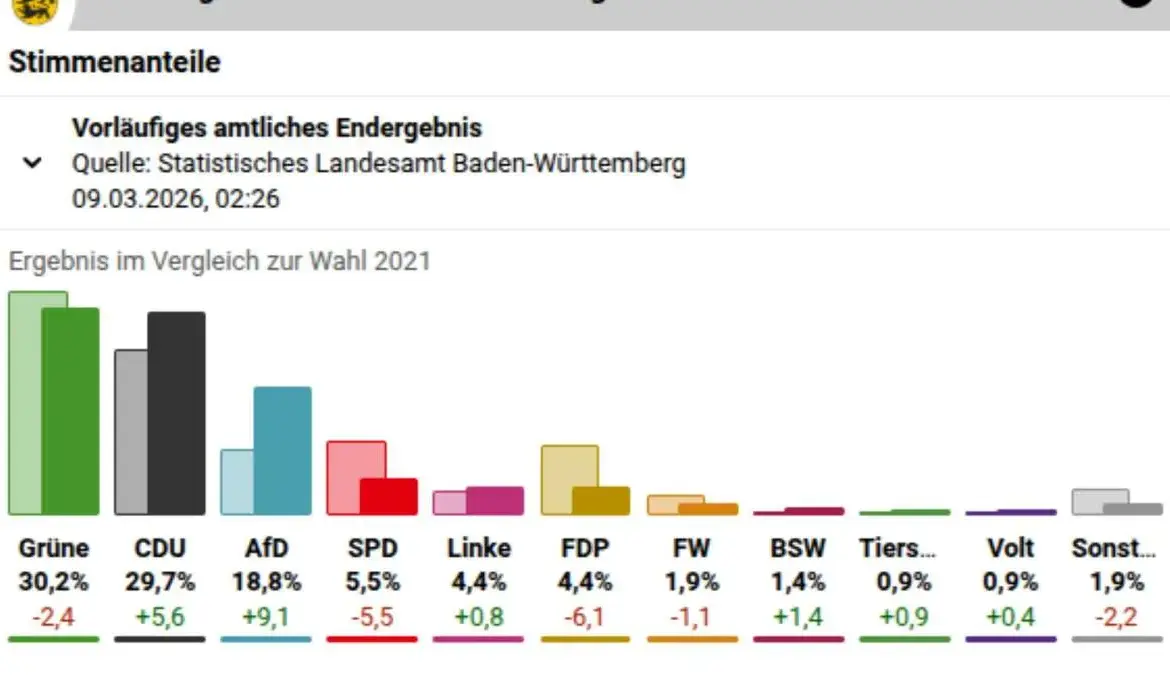
Before the recent developments in Baden-Württemberg, the political landscape was characterized by a stronghold of traditional parties, with the AfD struggling to gain significant traction. The party, classified as a right-wing extremist suspect by the Baden-Württemberg Office for the Protection of the Constitution, had previously garnered only 9.7% of the votes in the 2021 election. Markus Frohnmaier, a prominent figure within the AfD, had been serving as a Bundestag member since 2017 and was known for his foreign policy stance and connections to Russia.
A Decisive Shift in Voter Support
The situation changed dramatically during the 2026 Baden-Württemberg election held on March 8, where the AfD achieved 18.8% of the votes, marking a significant increase of 9.1% from the previous election. Despite this surge, Frohnmaier’s aspirations to become Ministerpräsident were thwarted as he was not on the ballot for the 7.7 million eligible voters. This unexpected outcome has left many questioning the future of the AfD in the region.
Immediate Effects on the AfD and Its Leadership
The immediate effects of this election result have been profound for the AfD. Alice Weidel, the party’s leader, expressed satisfaction with the results, indicating that they had effectively doubled their previous performance. This newfound support positions the AfD as likely to become the largest opposition party in the Baden-Württemberg parliament, which could shift the dynamics of political discourse in the region.
Frohnmaier’s Position and Controversies
Markus Frohnmaier’s journey has not been without controversy. Accusations of nepotism regarding his wife’s employment have surfaced, casting a shadow over his political career. Additionally, Frohnmaier’s past as a co-founder of the now-dissolved AfD youth organization Junge Alternative raises questions about his long-term vision for the party. His connections to Russia have also been a point of contention, leading to scrutiny from both political opponents and the media.
Expert Perspectives on the Shift
Political analysts have noted that the AfD’s rise in voter support reflects a broader trend of discontent among the electorate towards traditional parties. Experts suggest that this shift may be indicative of a growing acceptance of right-wing populism in Germany. Frohnmaier’s assertion that the AfD is a “bürgerlich-konservative Partei” (bourgeois-conservative party) aims to reframe the party’s image and attract a wider voter base, although the effectiveness of this strategy remains to be seen.
Collaboration Offers and Political Dynamics
In the wake of the election results, Frohnmaier has extended an olive branch to CDU’s Manuel Hagel, proposing collaboration. This move highlights the AfD’s intention to position itself as a viable alternative within the political spectrum, despite the resistance it faces from other parties. Manuel Hagel’s response, emphasizing that he would not accept votes from the AfD, underscores the challenges Frohnmaier and his party will encounter in their quest for legitimacy.
Looking Ahead
The future of Markus Frohnmaier and the AfD in Baden-Württemberg remains uncertain. While the party’s increased voter support presents an opportunity for growth, the exclusion of Frohnmaier from the ballot raises questions about leadership and strategy. As Cem Özdemir stated, the mandate of governance must focus on ensuring that the AfD is weaker in future elections. Details remain unconfirmed regarding how the AfD will navigate these challenges and leverage its newfound support in the coming political landscape.