World Cup 2030 to span six countries across three continents
The 2030 World Cup is set to be a unique tournament, spanning across Spain, Portugal, and Morocco, with initial matches also scheduled in Uruguay, Argentina, and Paraguay. This marks the first time a World Cup will be hosted across six countries and three continents, coinciding with the tournament’s 100th anniversary.
The centennial celebration will see Uruguay host the opening match on June 8, 2030, at the Centenario Stadium in Montevideo. This stadium holds historical significance as the venue for the first World Cup final in 1930 and is the only stadium designated a Historical Monument of World Football by FIFA. The subsequent two games will take place in Buenos Aires, Argentina, and Asunción, Paraguay, during the same weekend. All six host nations will automatically qualify for the tournament.
Following these initial South American fixtures, teams and fans will travel approximately 6,000 miles for the group stage games in Europe and North Africa. FIFA has indicated that extra rest days will be incorporated into the schedule to accommodate the intercontinental travel, a first for the tournament.
Host Nations and Venues
Spain, hosting for the first time since 1982, will stage the majority of the matches, with Madrid and Barcelona being key cities. The specific list of Spanish host cities is still being finalised. Portugal will host World Cup games for the first time, with matches planned for Lisbon and Porto.
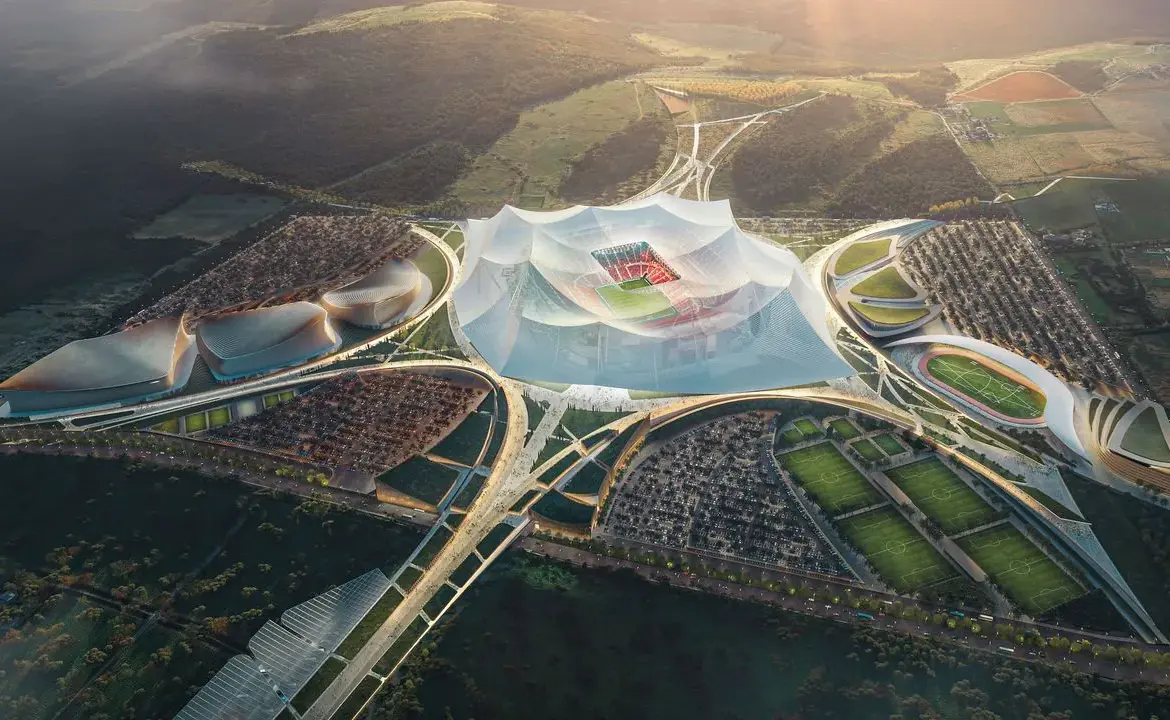
Morocco will make history as the first North African host and the second African nation to host the tournament, following South Africa in 2010. Matches are expected to be spread across six Moroccan cities, from Tangier to Agadir. A new 115,000-seat arena, the Grand Stade Hassan II, is under construction outside Casablanca in Benslimane. This stadium, designed to resemble a traditional Moroccan tent, is projected to be the largest football stadium globally.
The South American capitals hosting the opening matches are also preparing for the event. Montevideo’s Centenario Stadium will undergo a 30-month overhaul later this year, which will include adding a roof to all stands (excluding its tower) and increasing its capacity from 60,235 to 63,000.
Contenders for the Title
As the 2030 World Cup approaches, several national teams are being considered strong contenders. Spain, as the defending champions and co-hosts, are anticipated to be among the favourites. Their squad is expected to feature players like Unai Simón (32), Gavi (25), Pedri (27), and Lamine Yamal (22), with potential new talents such as Dean Huijsen (25) and Cristhian Mosquera (25) also in contention.
France, under new management with Zinedine Zidane, will look to build on their previous performances. Key players like Kylian Mbappé (31), Dayot Upamecano (31), and Aurélien Tchouaméni (30) are expected to form the core of their team. England is also considered to have a strong foundation, with players such as Declan Rice (31), Jude Bellingham (26), and Bukayo Saka (28) in their ranks. The team’s depth is further highlighted by players like Cole Palmer (28) and Phil Foden (30).
Morocco, having reached consecutive World Cup quarter-finals, including one semi-final appearance, is expected to be a formidable force, especially as co-hosts. Their squad could include Achraf Hakimi (31), Chadi Riad (26), and emerging talents like Ayyoub Bouaddi (22). Argentina, despite the retirement of Lionel Messi, will rely on players like Julián Álvarez (30) and Enzo Fernández (33). Portugal, with players such as Diogo Costa (30) and Gonçalo Ramos (28), will aim for their first World Cup title. Norway, featuring Erling Haaland (29) and Martin Ødegaard (31), and Côte d’Ivoire, with goalkeeper Yahia Fofana (29), are also expected to challenge.

The Final Match Debate
The location of the 2030 World Cup final is currently a subject of intense competition. Three stadiums are vying to host the event: Madrid’s Santiago Bernabéu, a redeveloped Camp Nou in Barcelona, and Morocco’s new Grand Stade Hassan II. While Spain had initially anticipated hosting the final, reports suggest that Casablanca is emerging as a strong contender. FIFA is expected to make an official decision on the final’s location in December 2026.
The proximity of Spain and Morocco, separated by the Strait of Gibraltar, offers logistical advantages for fans. Travel between cities like Seville and Tangier could be accomplished within a day, either by ferry or via Al Boraq, Africa’s first high-speed train. The 2030 World Cup will feature 104 matches over approximately six weeks, concluding with the final on July 21, 2030.
Read Also
- Harare: Tilak Varma addresses strike rate criticism ahead of Zimbabwe series
- Manchester City star Erling Haaland celebrates 26th birthday with girlfriend Isabel Haugseng Johansen
- Chelsea secures Morgan Rogers in record-breaking transfer
- Gavi believes Leandro Paredes should not be suspended after World Cup final confrontation
Source: theguardian.com