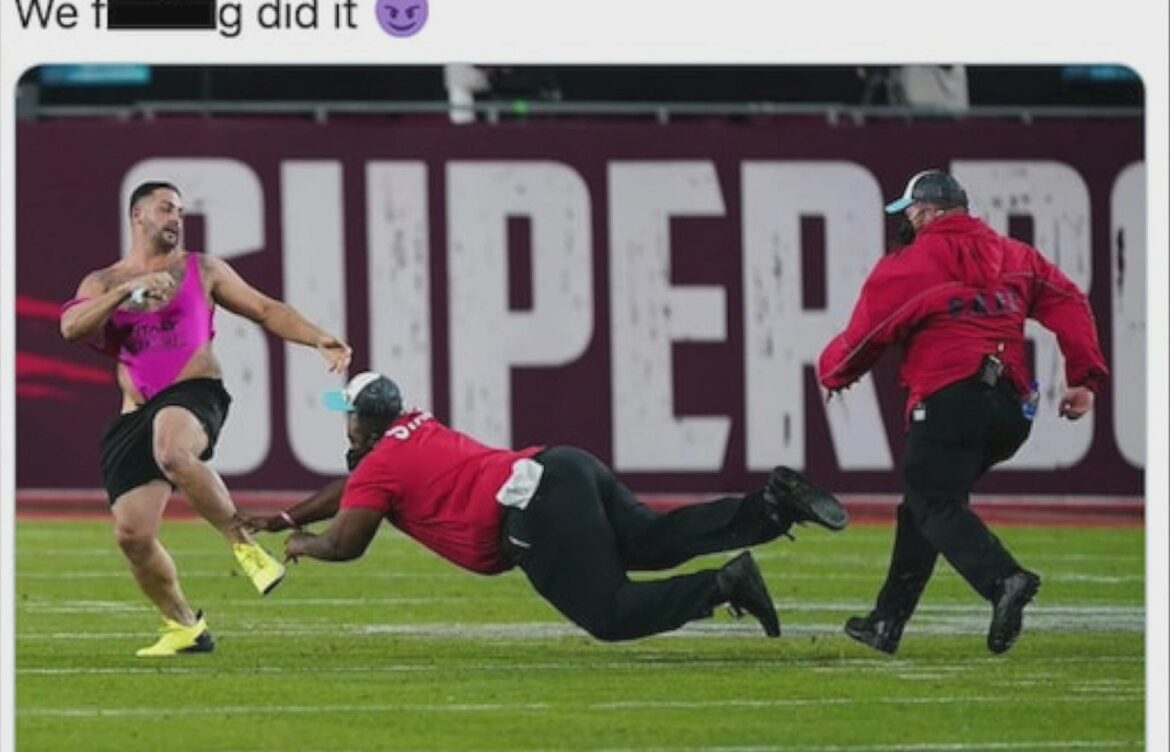
The Super Bowl Streaker: A Look at This Bold Tradition
Introduction
The Super Bowl is not just the pinnacle of American football; it has become a cultural phenomenon that captivates millions of viewers annually. Among the myriad of elements that contribute to the spectacle, one daring act often captures headlines: streaking. These unpredictable and bold interlopers have been streaking across the field during the big game for decades, raising questions about their motivations and the implications for security and fan behavior.
The Rise of Streaking at the Super Bowl
Streaking, the act of running naked in a public space, first gained popularity in the 1970s. Its emergence at the Super Bowl, however, can be traced back to the 1970s when a group of college students made headlines for their audacious antics at athletic events. In more recent years, streakers have become a staple at the Super Bowl, with notable incidents including the infamous streaker at Super Bowl 53 in 2019 who managed to evade security while sporting a pink body suit, leaving everyone in stitches.
Security Measures and Challenges
The repeated presence of streakers has prompted the NFL and event security to implement more stringent measures to prevent such incidents. Increased security personnel, surveillance technologies, and even strict penalties for offenders have been established to deter streaking. Despite these efforts, streakers still find ways to infiltrate the event, which speaks to the buoyant nature of this phenomenon. There is even a trend where streaking is premeditated, with some individuals turning the act into a social media event or a pr stunt.
The Streaker’s Perspective
While streaking may seem impulsive, those who engage in it often have elaborate plans. Some streakers aim to gain social media fame, while others may be protesting or making a political statement. Costume choices, such as the infamous banana suit or superhero attire, are often used to add humor and enhance visibility. The blurred lines between destitution and notoriety often fuel the desire to streak, with individuals gaining a moment in the spotlight during one of the most-watched television events.
Conclusion
The phenomenon of the Super Bowl streaker embodies both a light-hearted critique of societal norms and an intriguing glimpse into the extremes of fan behavior. While security measures have increased in response, the streaker’s presence remains as perennial as the sport itself. As the Super Bowl continues to evolve, it’s likely that the custom of streaking won’t disappear entirely; instead, it may adapt and grow, becoming yet another layer in the rich tapestry of this iconic American tradition. For viewers, it adds an unexpected twist to the already thrilling experience of the Super Bowl.