The Significance of Non-Violent Movements in Today’s Society
Introduction
Non-violent movements have played a crucial role in shaping political landscapes and promoting social change across the globe. Understanding the principles and historical context of non-violent resistance is vital in today’s society, where conflicts and disagreements can escalate into violence. This method of protest emphasizes dialogue, peaceful negotiations, and civil disobedience as means to achieve social justice, demonstrating that strength does not always manifest in aggression but can in peaceful persistence.
Historical Context
One of the most iconic figures in non-violent activism is Mahatma Gandhi, who successfully led India’s struggle for independence from British rule through non-violent resistance. His philosophy, known as Satyagraha, inspired subsequent leaders, including Martin Luther King Jr., whose work during the American Civil Rights Movement showcased the power of peaceful protest against systemic racism.
Recent events have highlighted the continued relevance of non-violent movements. For instance, the global response to police brutality, exemplified by the Black Lives Matter movement, has seen millions participate in peaceful protests advocating for justice and reform. Such demonstrations reaffirm the belief that non-violent action can be a powerful catalyst for change.
Current Events and Impact
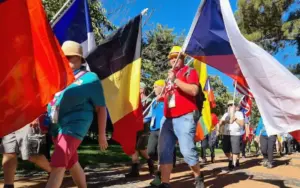
In 2023, various movements around the world have adopted non-violent strategies to address social inequalities and environmental concerns. Notable examples include protests advocating for climate action, where activists often utilize sit-ins, marches, and other peaceful means to draw attention to urgent issues without resorting to violence.
The effectiveness of non-violent movements can be attributed to their ability to unite people from diverse backgrounds, fostering solidarity and cooperation. By prioritizing non-violence, these movements engage a wider audience, encouraging individuals who might otherwise feel hesitant about joining more aggressive factions.
Conclusions
As societies strive to address injustices, the lessons learned from non-violent movements remain highly relevant. They remind us of the potential for peace-driven actions to instigate significant societal changes. The forecast for the continued relevance of non-violent protest is promising, particularly as individuals grow increasingly aware of the impacts of civil discord.
For readers, understanding non-violent practices and their historical significance not only broadens perspectives on conflict resolution but also empowers citizens to engage in advocacy that values peace over violence. As the world grapples with various forms of unrest, fostering non-violent solutions should serve as a guiding principle for future generations.