Crude Oil Prices Surge Amid Ongoing Iran War
Crude Oil Prices Surge Amid Ongoing Iran War
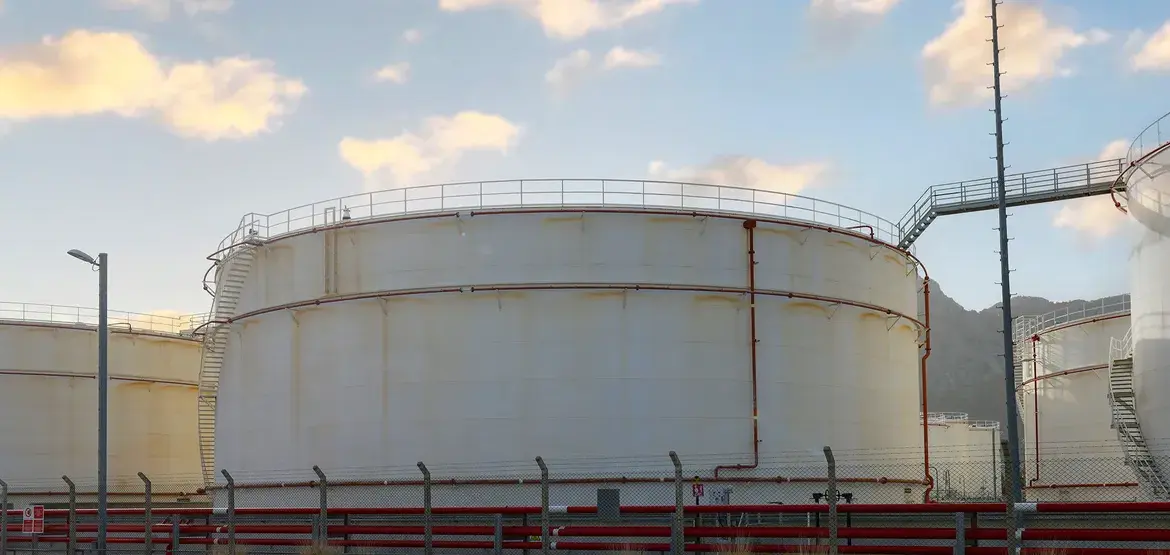
Crude oil prices have crossed $100 a barrel amid the ongoing Iran war, with Brent crude surging to around $119 per barrel, marking the highest level since July 2022. This dramatic increase in oil prices comes as the closure of the Strait of Hormuz poses significant risks to global oil supply, causing storage facilities to rapidly reach capacity.
Brent crude has surged as much as 28%, reaching $118.73 a barrel, while West Texas Intermediate (WTI) leaped 31% amid the escalating conflict. The Strait of Hormuz, a critical maritime chokepoint, handles nearly 20 million barrels per day, which is roughly one-fifth of global oil production. In 2025, exports moving through the strait averaged 13.4 million barrels per day, underscoring its importance in the global oil supply chain.
Historically, crude oil prices have fluctuated due to geopolitical tensions. Prices last climbed above $100 in February 2022, shortly after Russia’s invasion of Ukraine. The situation in the Strait of Hormuz is reminiscent of past crises, including the record high of $147.50 per barrel reached on July 11, 2008. In March 2022, prices approached their 2008 highs, with Brent reaching $139.13.
Market analysts are closely monitoring the situation. Ron Insana remarked, “Another 11 cents and oil hits $110! It was $55.99 exactly two months ago,” highlighting the rapid price changes. Andy Lipow added, “The psychological level of $100 oil may just be a short-term price target on its way to higher levels as the conflict drags on,” indicating that further increases could be on the horizon.
The impact of rising oil prices is not limited to the energy sector. The Nifty 50 index may see a 10 percent correction as crude oil surges above $115 per barrel. ICICI Securities noted that in such an environment, the Nifty 50 could potentially drop by approximately 10% from the pre-conflict level of 25,178, with the P/E ratio potentially dropping to around 18x.
As the conflict continues, the biggest concern remains the disruption of oil flows through the Strait of Hormuz. Haris Khurshid stated, “Right now, the biggest fear is still disruption to flows through Hormuz,” emphasizing the potential for further volatility in oil prices. The closure of the strait could put up to 4 million barrels a day at risk, exacerbating the already tense situation in global oil markets.
Details remain unconfirmed regarding the exact impact of the ongoing conflict on future crude oil prices. As the situation develops, market participants will be watching closely for any signs of resolution or further escalation that could influence the trajectory of oil prices.