Aramco shares rise amid rising oil prices and regional tensions
Background on Current Oil Market Conditions
The Iran war has entered its second week, prompting supply disruptions that may send oil prices higher. These geopolitical tensions have had a significant impact on the global oil market, particularly affecting major producers like Saudi Arabia.
Recent Developments Affecting Aramco
In a notable development, Saudi Aramco shares climbed as much as 4.9% in Riyadh on the first day of trading since Brent crude prices topped $90 a barrel. This increase reflects market reactions to the rising oil prices, which have been influenced by various factors, including a recent drone strike.
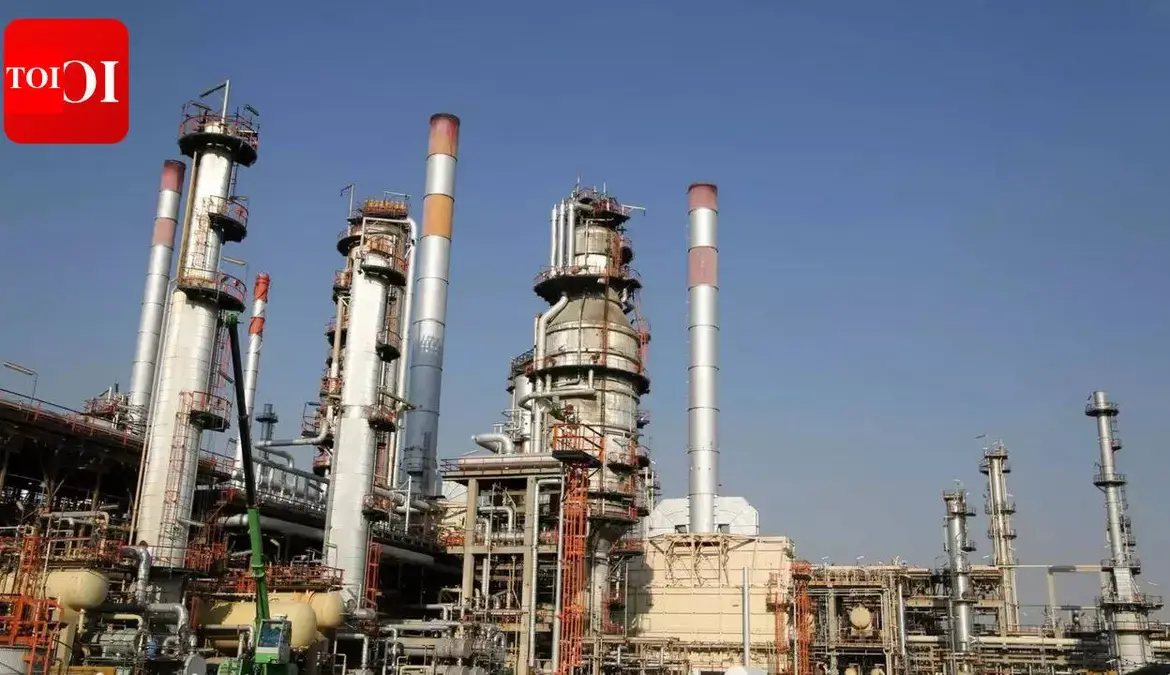
Brent crude prices rose to $80 per barrel after a drone strike hit the Aramco Ras Tanura refinery, which has a processing capacity of about 550,000 barrels of oil per day. The refinery’s associated port handles roughly 75% of Saudi Arabia’s total oil exports, making it a critical asset for the kingdom’s oil infrastructure.
Impact of the Drone Strike
The drone strike, reportedly carried out by an Iranian-made Shahed-136 drone, caused a small fire at the refinery. Officials described the fire as isolated and quickly brought under control. Saudi Aramco temporarily halted operations at the Ras Tanura refinery to assess potential damage.
In response to the escalating tensions, Saudi Arabia, the UAE, Kuwait, and Bahrain intercepted Iranian attacks overnight into Sunday. This coordinated defense underscores the heightened security concerns in the region.
Market Reactions and Future Expectations
Goldman Sachs Group Inc. cautioned that Aramco’s capacity to redirect oil cargoes may be limited, as the company has been redirecting oil shipments to Red Sea facilities to avoid the Strait of Hormuz. Junaid Ansari, an analyst, stated, “For Aramco, we believe that the gain in oil prices would offset a decline in exports,” indicating a potential resilience in the company’s operations despite the challenges.
Additionally, Aramco raised the price of its main oil grade for buyers in Asia for April by the most since August 2022, reflecting the current market dynamics. Observers note that if hostilities do not de-escalate, oil prices could reach $100 per barrel, further impacting global markets.
As the situation evolves, analysts believe that Aramco should be able to re-route a bulk of its shipments to the Red Sea, mitigating some of the risks associated with the Strait of Hormuz. The coming weeks will be crucial in determining how these geopolitical tensions will affect oil supply and pricing.