Amul’s Cooperative Model Expands in Odisha
What is the significance of Amul’s cooperative model in Odisha?
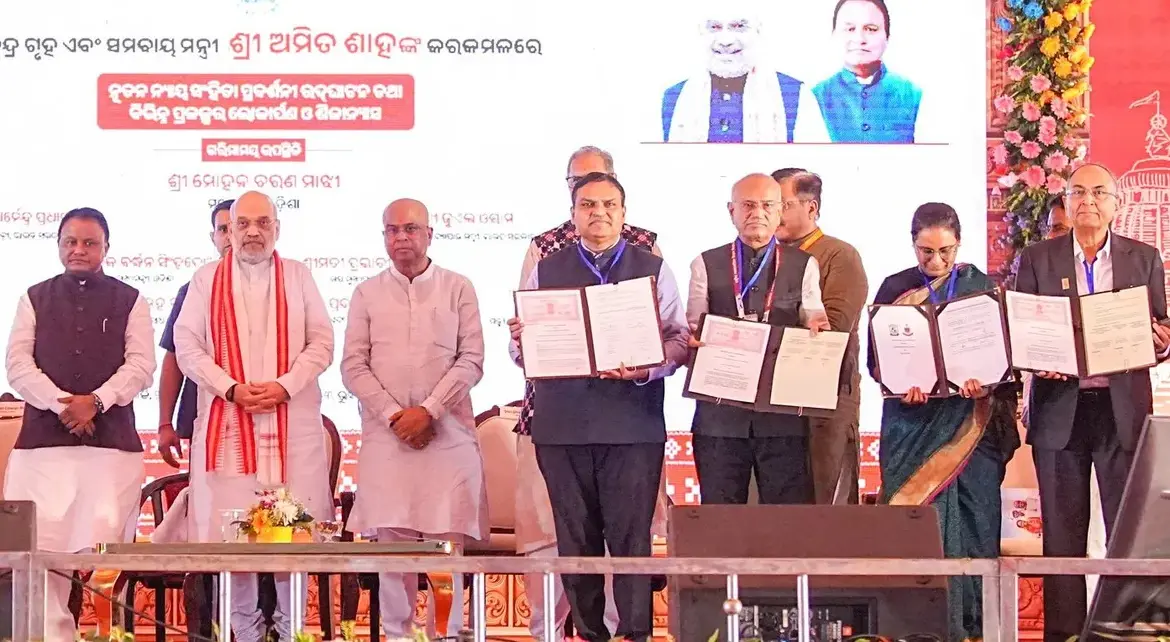
The recent inauguration of development projects in Odisha highlights the expanding influence of the Amul-style cooperative model in transforming rural economies. Union Home Minister Amit Shah announced initiatives worth over Rs 3,770 crore, emphasizing the cooperative sector’s pivotal role in enhancing the livelihoods of farmers and rural households.
During the event, Shah pointed out that the government aims to establish dairy cooperatives across villages in Odisha, which is expected to create sustainable income opportunities, particularly for women. He stated, “Today in Gujarat, through 3.6 million rural women, Amul became a movement, and today Amul does business worth Rs 1.3 lakh crore. Its profit, down to every penny, goes to the women cattle herders of Gujarat.” This statement underscores the potential benefits of adopting a similar model in Odisha.
The projects inaugurated included significant contributions from the National Dairy Development Board (NDDB), the Odisha State Cooperative Milk Producers’ Federation (OMFED), and the Odisha government. Shah’s remarks reflect a broader strategy to empower local economies through cooperative structures.
Additionally, a new sulphuric acid stream was inaugurated at the IFFCO unit in Paradeep, further supporting the cooperative framework. Union Minister George Kurian expressed a willingness to assist in transforming Kerala’s MatsyaFed into a national-level cooperative institution akin to Amul, indicating a growing recognition of the cooperative model’s efficacy.
Shah’s vision includes not only the establishment of dairy cooperatives but also the training of beneficiaries in fisheries-related activities, with 690 individuals expected to receive such training. Furthermore, 400 women are anticipated to undergo leadership and entrepreneurship training, fostering a new generation of empowered women in rural areas.
The cooperative sector has historically played a transformative role in strengthening rural and sectoral economies in India, and the current initiatives in Odisha could serve as a model for other states. As these projects unfold, the impact on local communities and economies will be closely monitored.
While the plans for expanding dairy cooperatives in Odisha are ambitious, details regarding the implementation timeline and specific locations remain unconfirmed. Stakeholders will be keen to see how these initiatives develop in the coming months.