The Legacy of George Washington: America’s Founding Father
Introduction
George Washington, born on February 22, 1732, in Westmoreland County, Virginia, is often hailed as the “Father of His Country” due to his pivotal role in the founding of the United States. His leadership during the American Revolution and his precedent-setting presidency have made him an enduring symbol of American democracy and governance. Understanding his contributions is essential for recognizing the values and principles that shaped the nation.
Key Contributions
Washington’s military career began when he served as a junior officer in the French and Indian War, but it was during the American Revolutionary War that he achieved national prominence. Appointed as the commander-in-chief of the Continental Army in 1775, Washington faced numerous challenges, including a lack of supplies, poorly trained troops, and internal divisions.
Despite these obstacles, he led significant victories, including the surprise attack on Hessian forces in Trenton and the decisive victory at Yorktown in 1781, which effectively ended British attempts to reclaim the colonies. His ability to maintain the army’s morale and loyalty was crucial to the colonial cause.
The Role in the Constitution
After the war, Washington’s influence did not wane. He presided over the Constitutional Convention in 1787 and was instrumental in the drafting of the U.S. Constitution. His support of a stronger federal government helped to secure ratification of the document, which outlined the framework for American governance. Washington’s leadership was characterized by a commitment to unity and a desire to set a nonpartisan tone in a rapidly diversifying nation.
Presidency and Legacy
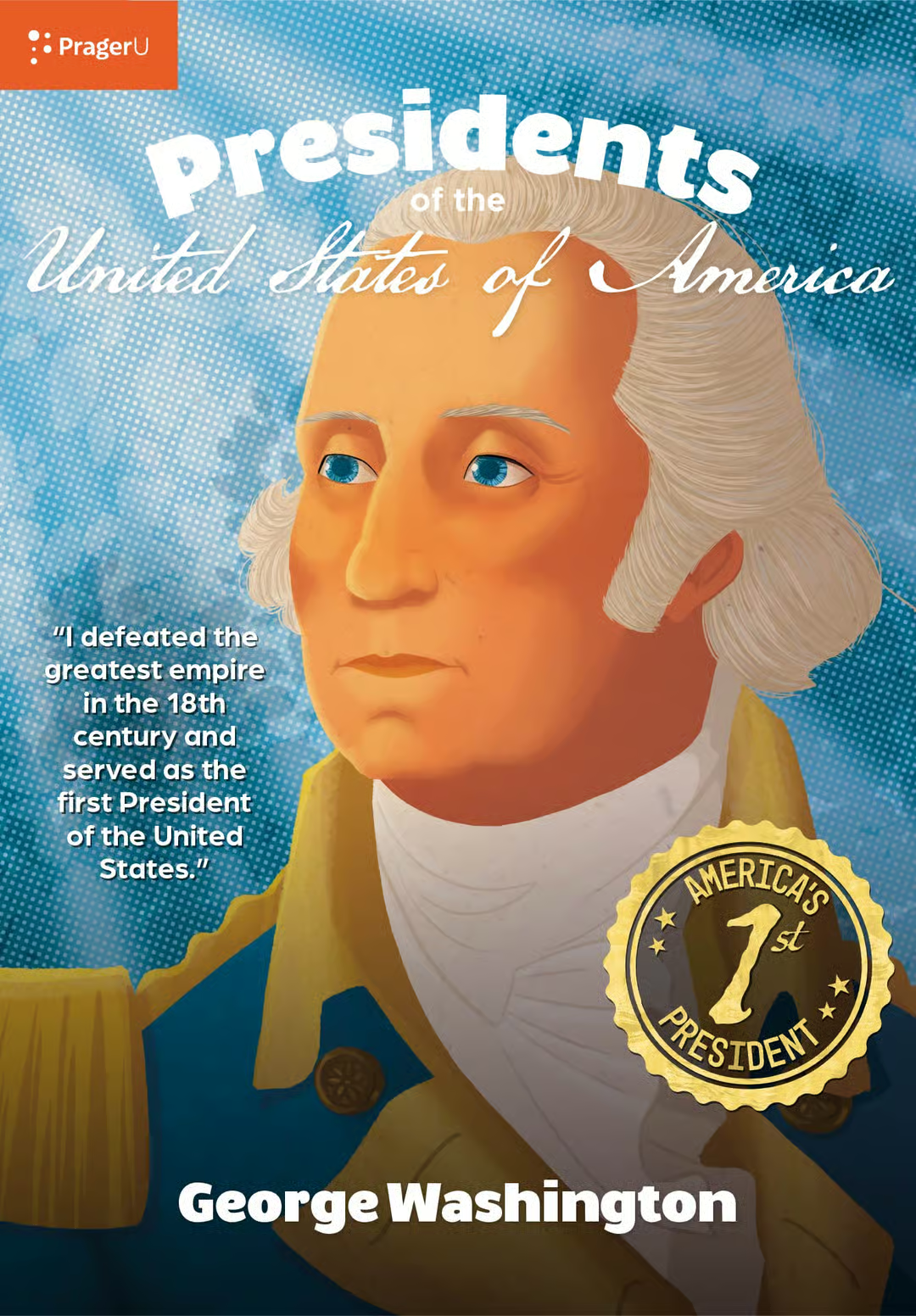
Washington was unanimously elected as the first President of the United States in 1789. He defined the role of the presidency through his actions and established many protocols that are still followed today. He emphasized the importance of a strong but limited federal government, warned against political factions in his Farewell Address, and championed policies that would promote national unity.
His decision to step down after two terms set a precedent for future presidents, reinforcing the idea that leadership is a public service rather than a means for personal gain. Washington’s vision of a nation where liberty and democracy flourished continues to resonate in American culture.
Conclusion
George Washington’s legacy endures through his unwavering commitment to the ideals of freedom and democracy. His contributions as a military leader, constitutional architect, and first president were crucial in forging a new nation. As we reflect on modern challenges, Washington’s insights into governance, unity, and civic responsibility remain relevant, solidifying his place as a fundamental figure in American history.